Lessons from Dragonflies
What happens before the swarm?

O my decadent counter-revolution. My beautiful mechanism. What matters most is not invention, force or calculation, but what it means to suffer the fate of failure, and to learn from it.

            (A mistake made by the struggle. As Césaire knew—only too well—modern revolt needs a black clarity of vision.) - “Letter on Alladat” by D.S. Marriott

 “Anarchism, like anything else finds a radical new meaning when it meets blackness.” - Hannibal Abdul Shakur
Recently I rewatched SVW’s “Use Your Heart” music video. As the short film progresses, a gray, dreary city becomes a green haven when two lovers meet and quite literally let their love blossom. I want to put this song in conversation with Jill Scott’s most recent project To Whom It May Concern, specifically the single “Don’t Play” she reminds her lover that “You can feel and see at the same time” I suppose this invitation is ultimately where my writing sits.
Our music lineages have always been intertwined with nature. Stevie Wonder, Parliament-Funkadelic, Mingus, more contemporary artists like Kelela and Noname have invoked ecological themes to express desire, longing, parallels with the Black experience, or to even more explicitly mourn/uplift the environment. Certain intensities call for a return to memory, to a vibrational humming that invites us to look beyond the surface.
This July, I’ve been doing my own gazing, buzzing with desire and a responsibility to that desire. There are no creatures who embody this multisensorial vision better than dragonflies. And there is one revolutionary leader I think of when I think of dragonflies — Kuwasi Balagoon.
While bird-watching is having its own Black renaissance, I’m busy looking at dragonflies. Black birdwatchers have pondered flight as escape, as a physical emblem of freedom, evident in the writings of J Drew Lanham and Christian Cooper. And while I can get down with that, there’s something complex, viscerally militant about dragonflies that draws me in deeper. Every place I’ve visited, I’ve encountered dragonflies. Cuba, Denver, Spain, Lassen National Park, Zambia…all different types of dragonflies, going about their aerial business. They could care less if I was there. They’ve got land to survey, nymphs to protect, self-emancipation through a choreographed liberation guided by feeling and sight.
“True” dragonflies emerged during the Early Jurassic period, though an early ancestor, Meganisoptera, came to be 325 million years ago in Upper Carboniferous rocks in the geology that now makes up Europe and eastern North America. Today, more than 3,000 species of dragonfly exist on every continent except Antarctica.
How are they so widespread? Well, some dragonflies are swept to remote regions by strong winds. But others prefer to take the scenic route. Temperature often plays a key role in determining when to move. The globe skimmer dragonfly (Pantala flavescens) can traverse across 3700 miles of ocean between the Maldives and East Africa. Common green darners (Anax junius) are among the most abundant species in the Western hemisphere and are incredibly difficult to photograph due to their speed.
Most dragonfly species are fiercely territorial, especially when it comes to areas for breeding. Dragonflies usually choose their territories based on attractive features, such as ideal substrate for egg laying, plant species abundance, or foraging potential. And they are adept hunters, catching up to 95% of the prey they pursue. Dragonflies employ “motion camouflage” when attacking prey or rival dragonflies, reducing the appearance of movement, appearing to remain stationary while tactfully approaching their target. Nearly 80 percent of a dragonfly’s brain is dedicated to sight. They can see in 360 degrees, and process images way faster than humans can ever imagine.
I’ve only seen dragonflies mating in real time once, in Sierra Nevadas, one of the driest regions on earth. Variegated meadowhawks (Sympetrum corruptum) stay connected after mating, with the male’s abdomen connected to the female’s head and the end of the female’s abdomen connected to the male’s thorax (midsection, below the head and before the abdomen). They dance through the air as they mate, occasionally perching on nearby twigs or plants for support. Occasionally, they arch to meet each others anatomy, almost making the shape of a heart between their two bodies.
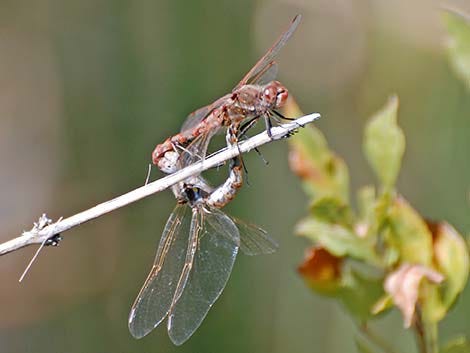
There is something very delicious about this mating ritual. I too would like to dance with my lover through the sky in an intimate embrace. I’m lucky — right now in the Bay Area, it’s not too hot to make love. For dragonflies, mating is an exquisite display of attraction, acrobatics, engaging in wing to wing combat against other suitors if necessary. Most dragonfly males become extra territorial during mating season, holding down the best spots to attract the most mates.
Dragonflies spend the majority of their existence underwater as nymphs, draped in dull coloration for camouflage. Some larger species can spend up to five years in the nymph stage, moulting between six and fifteen times as they age. The young adults complete their final moult by literally pulling itself through its exoskeleton, using a plant stalk as leverage. When they emerge they become “tenerals,” young adults who have yet to earn their color. Those vibrant blues, oranges, greens and pinks come a few short days after. After a short month or so above water, these insects transition onto the next realm.
To age is a blessing not afforded to many. If you’re lucky, your youth, while formative, is only a blip in the entire arc of your existence, and you have the opportunity to experience adulthood on as close to your own terms as possible. Observing dragonflies, their short adulthood earned from years of transformation submerged in mud makes me feel such gratitude to this planet, and so much disgust for how colonization took that raw, carnal beauty and distorted it. I think of Nolan Wells, Kohen Wiley, Juliana Nzita, their metamorphoses cut short. Who would they have become if their lives weren’t cut short by white supremacist violence?
On hot days, dragonflies will sometimes skim their bodies over their preferred water source. This is my favorite part of watching dragonflies. The boundary between play and self-preservation is porous.
When researching dragonflies and African religions initially, I didn’t find much. In fact, most of what I found was split between East Asian and European cosmologies, with some examples from Navajo and Zuni lore, in addition to excerpts from one of my favorite poetry collections Dragonfly Weather by Lois Red Elk, a member of the Dakota peoples:
He gulps/ moisture from/humid air and lifts his prayers to a/southern wind asking/his dragonfly to use its speed and/take him quickly/to the world where vision is caught/in hope, where/sacrifice is recognized and his/weakness turns into/a victory over all that is negative. from “Somewhere Between” by Lois Red Elk
Dragonflies are often interpreted as messengers from the spirit world. Fascinatingly, historic European perceptions of dragonflies tended towards the negative, and were usually considered to be in association with the Devil to harvest souls. The irony is not lost on me. How creatures get caricatured, rather than studied, is an essential contradiction to colonialism. Dragonflies appear in our lives when we most need guidance and direction.
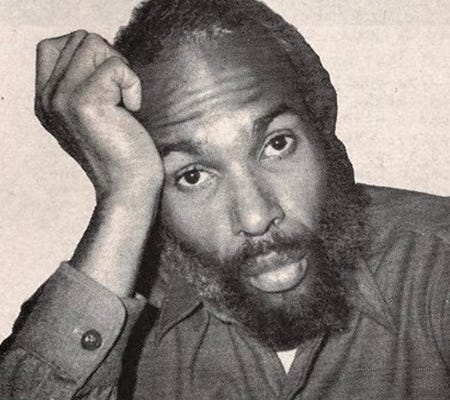
Like dragonflies, the writings of Kuwasi Balagoon came to me at a time I most needed direction.
Kuwasi Balagoon was initially radicalized by race riots that occurred in his home state of Maryland, becoming disillusioned with nonviolence early in his teens. Balagoon joined the U.S. Army, where he faced his own share of racist violence from white soldiers. Already an astute organizer, Balagoon and some other Black soldiers formed a secret group called “De Legislators,” who not only defended themselves from racist attacks, but made it clear that they would not tolerate them, in “Look for Me in the Whirlwind, his writing revealed:”
“Every time white G.I.s ganged a black G.I., we moved to more than even the score. One at a time we would catch up with them and beat and stomp them so bad that helicopters would have to be used to take them to better hospitals than the ones in the area.”My maternal grandfather had a similar experience, facing racism and physical violence from the same men he was drafted to fight alongside. His elder brother was so traumatized by his experiences that he turned to opiates to cope with his pain, eventually dying from an overdose. At the same time, his other brother was briefly incarcerated for being a conscientious objector, stating to the recruiting officer (paraphrased) that “if you give me a gun, I’m gonna use it on my enemy. I know who my enemy is, and it ain’t no Korean.”
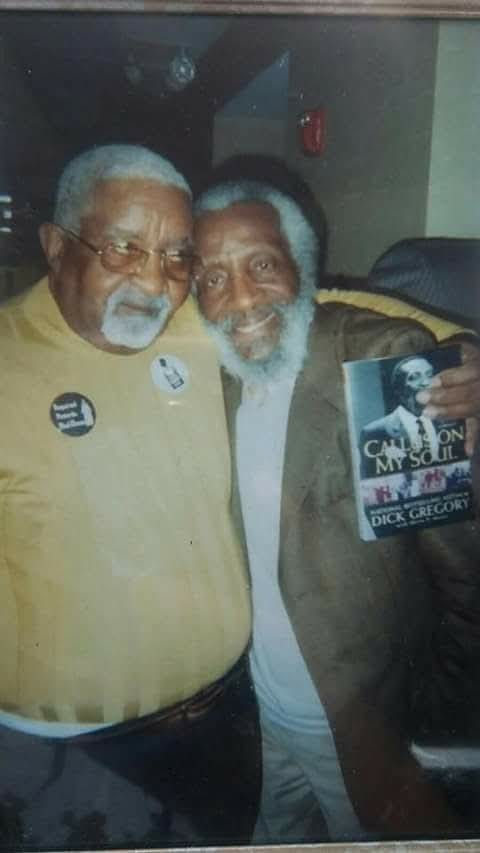
Balagoon and De Legislators’ actions inspired Latine and Asian soldiers to form similar cadres. Perhaps it is because of the times, the nature of the draft and the post-colonial struggle that so many of our Black revolutionaries were in the army. But it is what they did with their tenure, the skills learned and transferred to revolutionary struggle that made all the difference. In the short feature film As Above, So Below (1973) directed by Larry Clark, a marine returns home from the Vietnam War with a heightened political consciousness. He is recruited by a group of Black radicals, not without heavy vetting, for a guerrilla style revolutionary project, post-Watts. What then occurs is a surrealist meditation on the nature of isolation, opportunities for solidarity amidst state and social repression, and the cyclical possibilities to try, and try again…
“Hey brother, do you believe in foreknowledge? You know, deja-vu--it’s like a birth to a new life, and you go on and on to other, still higher planes of life...” spoken by Bee, from As Above, So Below
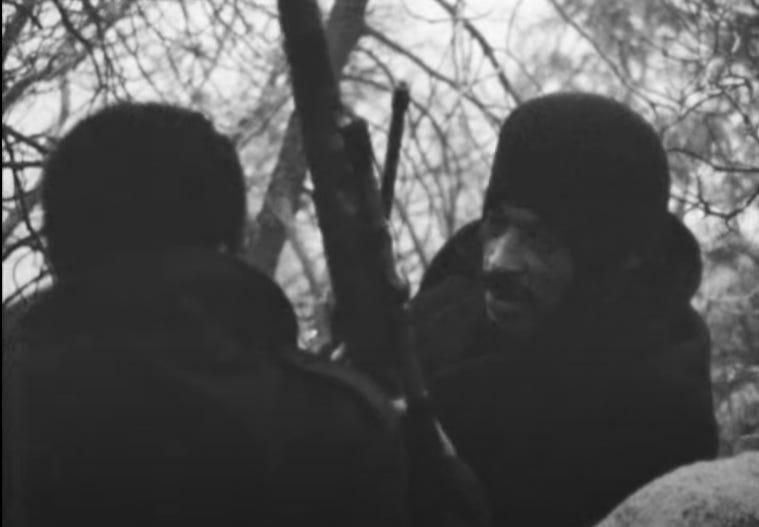
During his time in the army, Balagoon connected with members of the African diaspora from other nations, and a budding Pan-Africanism and internationalism established in Balagoon’s consciousness.
Upon discharge, Balagoon moved to Harlem, where he became involved in tenant organizing with the Community Council on Housing (CCOH). Balagoon, his sister and a few other members of CCOH were arrested on disorderly conduct after interrupting a session of Congress where they brought a cage of rats to protest the living conditions in urban housing.
This happened a few years before Nathan Hare published his essay “Black Ecology,” which highlighted the stark differences between white environmentalism and the “ecological ordeal” of Black peoples:
“Black spatial locations location and distribution not only expose blacks to more devastating and divergent environmental handicaps; they also affect black social and psychological adjustment in a number of subtle ways. At certain levels of optimum density, flies in fruit jars have been known to die in droves and rats in crowded places to attack and eat their young and otherwise behave in strange and aberrant ways. Frantz Fanon and others have patiently charted the way in which oppressed peoples so crowded turn upon themselves when, for whatever reason, they feel too weak to fight their oppressor.”The throughlines of ecological and anti-Black violence are always apparent. Dragonflies won’t thrive in dirty, standing water.
After leaving CCOH, Balagoon joined the Central Harlem Committee for Self-Defense, and around the same time became involved in the Yoruba Temple of Harlem, organized by Nana Oserjiman Adefumi, initiated in Cuba, whose own purpose was to facilitate the re-Africanizing the Black diaspora in the so-called United States. This is where Balagoon became Kuwasi Balagoon, Kuwasi, a Ghanaian name for a male born on Sunday, and “Balagoon,” a Yoruba word for “warrior.”
In some circles, it is considered offensive to call movement elders by their “given” names rather than their reclaimed, African names. But in some previous generations, organizers are referred to by multiple names, sometimes solely by their given names. I think this has a lot to do with an older sensibility about the importance of naming, that you are bestowed a title from your lineage, and it is how family ties are established and preserved. But, I also think a lot of folks in my grandparent’s generation, and even my mother’s generation, grew up with these leaders, and there is a bit of nostalgia attached to these names: a close family friend renamed himself in adulthood, going so far as to legally change his name, yet his family members still call him by the name his mother gave him. However, choosing an African name, especially as one develops a consciousness of the anti-African world around them, with the input of a wider diasporic community, signals an intimacy beyond the nuclear family, reaching back beyond the rupture of the trans-Atlantic slave trade to remember roots while affirming our shared future as dispersed African peoples. With that context, throughout this essay I will continue to refer to Balagoon by his chosen name. Similar to the dragonfly, these elders underwent their own metamorphoses – I think it is only right to honor that.
Perhaps calling dragonflies warriors is a bit of a stretch, but I’m willing to make that leap. They have no sense of hearing or smell, and they can’t even “walk.” But they are masters at flight and vision, maneuvering in ways most other animals could only dream of: hovering, flying backwards, upside down, their entire existence is a display of agility. Seeing them engage in aerial combat is a brutal but informative watch. Unfortunately, defense technologies have taken note, algorithmizing dragonfly fight and flight patterns into drones, fighter jets and other warmaking weapons.
Returning to the case of revolutionary leaders who happened to be in the Armed Forces, it’s always a matter of whose hands these tools fall into. And how warriors find themselves called to a particular struggle.
Studying histories of Black radicalism, there is a consistent presence of returning African religions, or at least the rejection/disillusionment with Western religion. Even in As Above, So Below, there is a scathing critique of the Black Christian church as a pacifying force in the community. Clark himself faced backlash for the film: one of his professors at UCLA wanted to report him to the House Un-American Activities Committee (HUAC) for Clark’s use of HUAC audio reports in the film — ironic, because HUAC had disbanded at that point.
In Akan culture, dragonflies are associated with transformation and renewal, and appreciated for their role in protecting humans from viruses and disease (dragonflies eat flies and mosquitoes). Along the Tano River Basin in Ghana, the black emperor dragonfly (anax tristis) is an excellent bioindicator for aquatic system health. In certain Akan/Hoodoo traditions, dragonflies are interpreted as water-gazers, facilitating the process of “going underwater” (living most of their lives submerged), which is another way of phrasing how participants become initiated in aforementioned traditions.
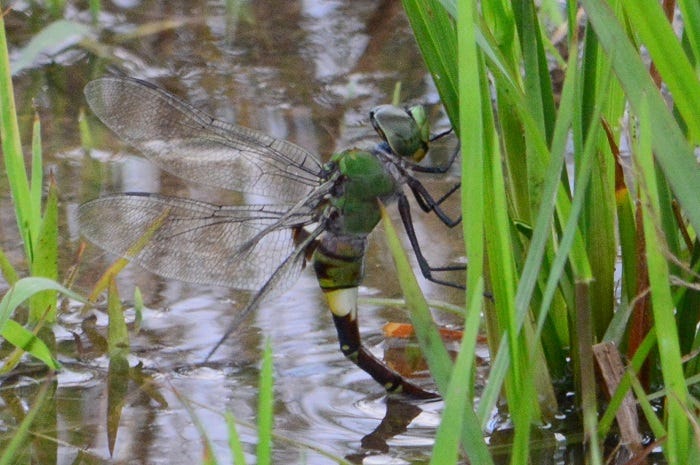
Balagoon’s “going underwater,” his retitling, gave way to an understanding of his role in revolutionary armed struggle. Becoming a New Afrikan anarchist, Balagoon took his experiences from the Army, his involvement (and later, disinvolvement) with the New York chapter of the Black Panther Party, and evolved into his role with the Black Liberation Army.
For Balagoon, Black liberation could only be achieved through anarchism, referencing Italian anarchist Errico Malatesta’s assertion that revolutionary life must “consist of more deeds than words.” This went hand in hand with a desire for land: per the words of Malcolm X, all revolution is based on land.
In “Anarchy Can’t Fight Alone,” Balagoon writes:
“We permit people of other ideologies to define Anarchy rather than bring our views to the masses and provide models to show the contrary. We permit corporations to not only lay off workers and to threaten the balance of workers while cutting their salaries, but to poison the air and water to boot. We permit the police, Klan and Nazis to terrorize whatever sector of the population they wish without repaying them back in any kind. In short, by not engaging in mass organizing and delivering war to the oppressors we become Anarchists in name only.”I think our discomfort with anarchism, particularly Black/New Afrikan and Indigenous anarchisms, is anachronistic at best, movement wounding at worst. There’s a lot of propaganda out there, and oftentimes there is a perception about the “right” way to perform fugitivity. While there is a cyclical fascination with maroons and marronage, Black militancy, and especially Anarkata (a non-hierarchical, Pan-African, self-determination positionality) is balked at, though they are two sides of the same coin. Marronage, like anarchism, is not a theoretical framework, but an embodied practice. Disruption is not inherently negative. Balagoon’s numerous self-liberations from U.S. prisons earned him the nickname “maroon.” In the Anarchist library, Akinyele Umoja observes the inherently isolating nature of marronage, and what gaps that may create if not honored properly, that Balagoon “remains a ‘Maroon,’ isolated from mainstream Black and left political dialogue and memory.”
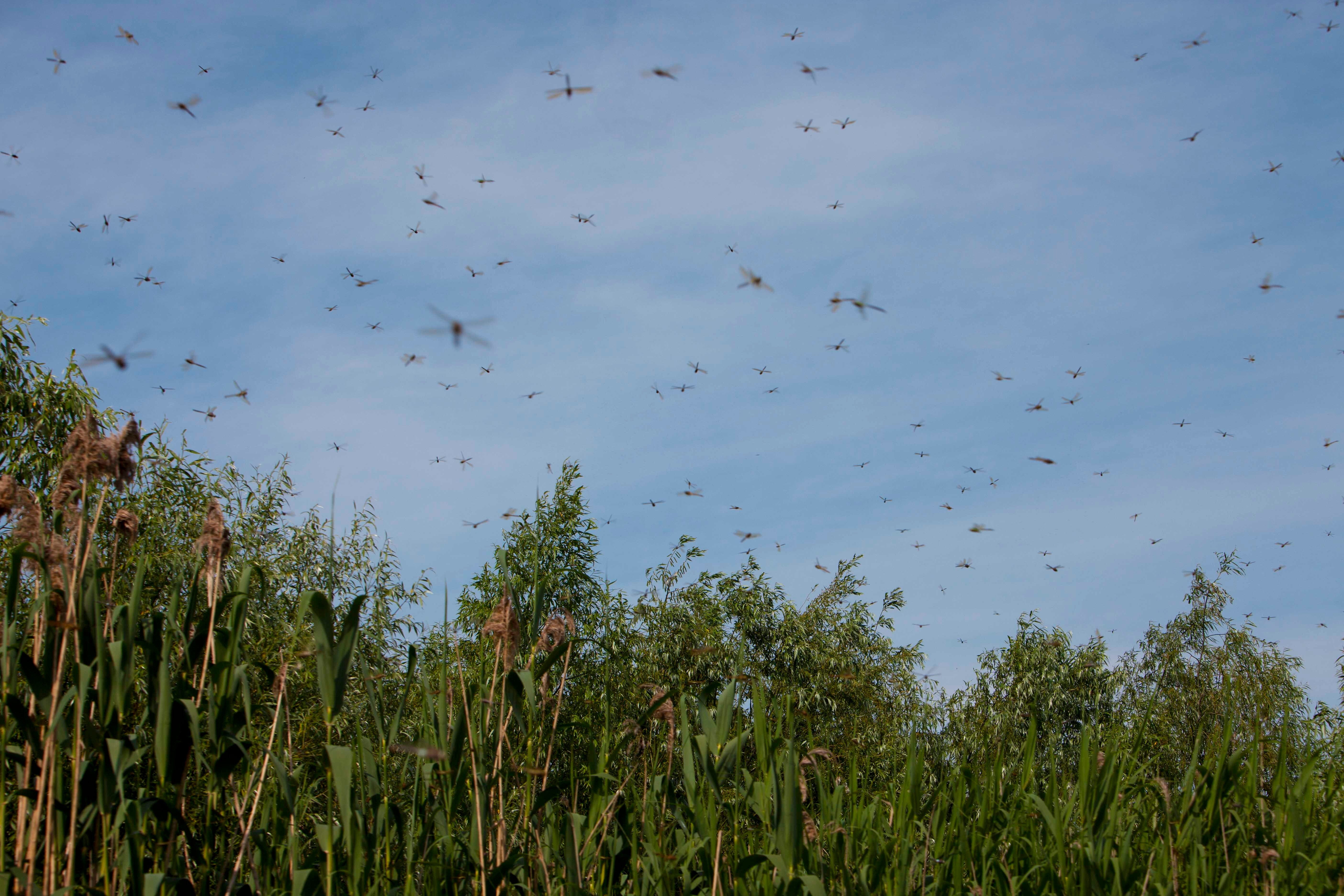
Dragonflies are typically solitary creatures, but occasionally they will gather in clusters or swarms. Sometimes they gather if there is an abundance of food, or they wait until larger mammals (who attract flies, mosquitoes, etc.) pass by, and accompany them to pick off flying insects. Some species, such as swamp darners (Epiaeschna heros) and black saddlebags (Tramea lacerata) engage in migratory swarms, where they follow a topographic line to get from point A to point B. This is where I think the gap between dragonfly ontology and anarkata dissolves even more: we can resist capture and caricature, we can move with intention whether in solitude or solidarity, embraced in the openness of the land.
Across millennia, dragonflies have learned to deal with tadpoles, birds, wasps, spiders, parasites – sometimes even other dragonflies. But once they reach the adult stage, dragonflies have few natural predators. Overall, the biggest threat to dragonflies is human-driven habitat destruction. Wetland erosion has led to a steep decline in dragonfly populations on the Asian and African continents. Dragonflies are attracted to surfaces with polarization, often mistaking them for water surfaces, and can attempt to lay eggs on solar panels, cars, and similar structures.
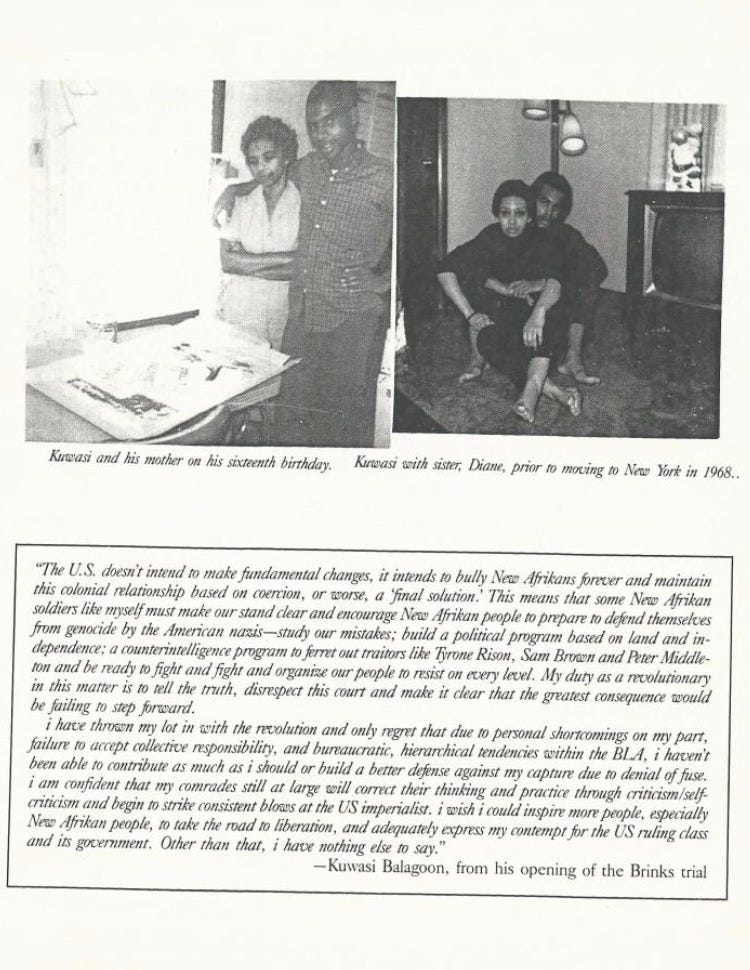
“We are human and nobody wants to live under or bring offspring into a confined atmosphere with an artificial sky.” Balagoon said during his Brinks trial statement.
Western hegemony is disaster-oriented. But for many burdened by life’s many horrors, it’s easier to blame chemtrails, vaccines, immigrants, acts of God, sodomy than it is to grapple with a system so hell-bent on destruction. Fanon writes that Black people, try as they might, can never “therapize” themselves out of living in a white supremacist world. This is where action comes into play. The problems of yesterday are only amplified by today’s crises. Perhaps we can look towards the inherent anarchy of the natural world to reach beyond a world defined by domination and rigidity, into one that honors our desires, to reignite that action-orientation.
In writing about desire, and thinking back to the sensual dragonfly dance, one cannot divorce Balagoon’s queerness from his Black radicalism. Dragonflies have long been a queer symbol, and some species, like the darner dragonfly (Basiaeschna janata), engage in same-sex coupling. Despite being an openly bisexual man, many of Balagoon’s comrades refused to acknowledge this key aspect of his identity, stating, “that’s Kuwasi’s business.” Balagoon died while incarcerated, of complications due to AIDS. For a long time, Balagoon’s own comrades refused to mention this. Even as he was sick, he continued to organize and facilitate political education within prisons, writing numerous texts and letters. He was, at the center of it all, a lover, an appreciator of human beauty and capacity, and the two could not be divorced from each other. Though he was respected for his commitment to revolutionary struggle, it saddens me that he was not embraced as a full human, in all his desire and messiness, which inevitably informed his organizing pedagogy. Because he had such a lust for life, he could see past the facade of colonial-capitalism and into a world where love and liberation could truly bloom.
Towards the end of “Anarchy Can’t Fight Alone,” Balagoon writes:
“Set up communes in abandoned buildings, sell scrap cars and aluminum cans. Turn vacant lots into gardens…And of course we should relearn how to preserve food; we must learn construction and ways to take back our lives, help each other move and stay in shape.

Let’s keep the American and Canadian flags flying at half mast... I refuse to believe that Direct Action has been captured.”
In 1983, Balagoon wrote that the state was quickly consolidating fascism. Over forty years later, this statement continues to ring true. But our reactions are half-baked, hazy, torn asunder. I’ll admit: most days I feel directionless. I think this is why I spend so much time looking at something (nature) so much bigger and wiser than myself for direction – that if dragonflies can evolve and endure for as long as Pangea, maybe in this short time that I have here on earth I can commit myself to building something that will outlast empire.
Like Anarkata, the dragonfly is understudied. They are incredibly fast, are particular in their needs, and hard to control in a lab setting. But also, the funding just isn’t quite there for most entomology labs. In the past couple of years, conservationists have indicated how important it is to incorporate dragonfly studies in global conservation efforts. Compared to other insect populations, dragonflies (and damselflies) are doing relatively well. To date, there is only one species of dragonfly that is considered extinct, the St. Helena darter (Sympetrum dilatatum), that was endemic to the island of Saint Helena in the South Atlantic Ocean, close to Angola. Approximately 16% of dragonfly species are threatened; dragonflies are especially important in protecting wetlands, freshwater, riparian and neighboring terrestrial ecosystems, areas once deemed as wastelands by colonizers, and can indicate needs for ecosystem restoration.
“It’s a small circle of revolutionaries in this hemisphere or in the northern half of it, we can’t just deal within the same small circle, at some point new recruits must be won over, youth must be ignited: all the rallies have got basically the same people showing year after year. i ask: Do these activists talk to people outside the movement? Obviously they don’t talk to people about the movement—we got to build a movement of activists who … address people who are already committed as well as people who are into other things.” from “Letters from Prison” Mary Patten and Madame Binh Graphics Collective Archives
The fortitude we must cultivate to not only withstand but transform this torn world requires learning from our elders’ mistakes and missteps. If Western capitalism is an exterminating force, we must resist extinction by any means necessary. Like good fire, anarkata can be a critical tool for world-building.
One of the exterminating tools of Western imperialism is incarceration. Even if people do not die while in prison, their lives are forever altered. Disappearing our comrades from social existence is not only a way to separate families and disrupt communities, but to serve as a scare tactic for those of us outside the prison walls to stun us into complacency. As military and imprisoning forces consolidate their power, so should we consolidate our defenses. Jakhi McCray, the Prairieland defendants, Mumia Abul-Jamal, thousands of migrants housed in disgusting detention centers – these are our kin.
Inertia is the State’s weapon. Precise, vivid motion must be ours. If you are looking for direction, consider writing letters. Save seeds. Archive cultural materials. Reject respectability every change you get. Source alternatives and starve corporations of your support where you are able. Combat misinformation whenever possible, do not succumb to eugenics. Lean into discomfort, and find support in those around you. On the eve of Black August 2026, which honors and connects with Black political prisoners such as Balagoon, I invite you, dear reader, to think about the question a newer peer asked myself and other writers during a panel on Anti-Imperialist Writing: what are you committed to?
That’s what dragonflies are: committed, fierce, precise, moving with chaos instead of being moved by it. They have survived as long as they did because of their adaptability and versatility. Just a couple days ago, I saw a dragonfly on the edge of Temescal. The blue dasher dragonfly (P. longipennis), is a generalist, a migrant, a maroon, with the ability to make a number of environments home, including urban centers. Though the blue dasher has adapted to utilize polluted lentic pools (stationary/stagnant water), its presence signals freshwater nearby. Enough maybe to begin the formation of an autonomous Black liberation zone.
Personal announcements:
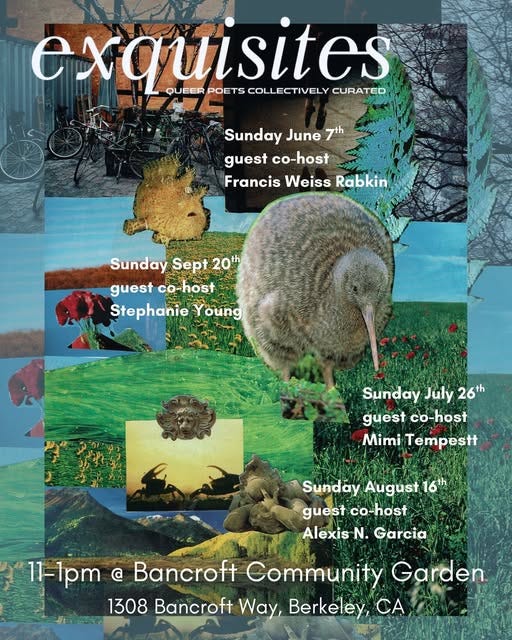
I’ll be reading at exquisites bay area August 16th with an amazing poets!
T-minus 1.5 months until Tending the Vines: Abundance in Eight Plants (Timber Press, 2026). Preorder available now!
What I’m Reading:
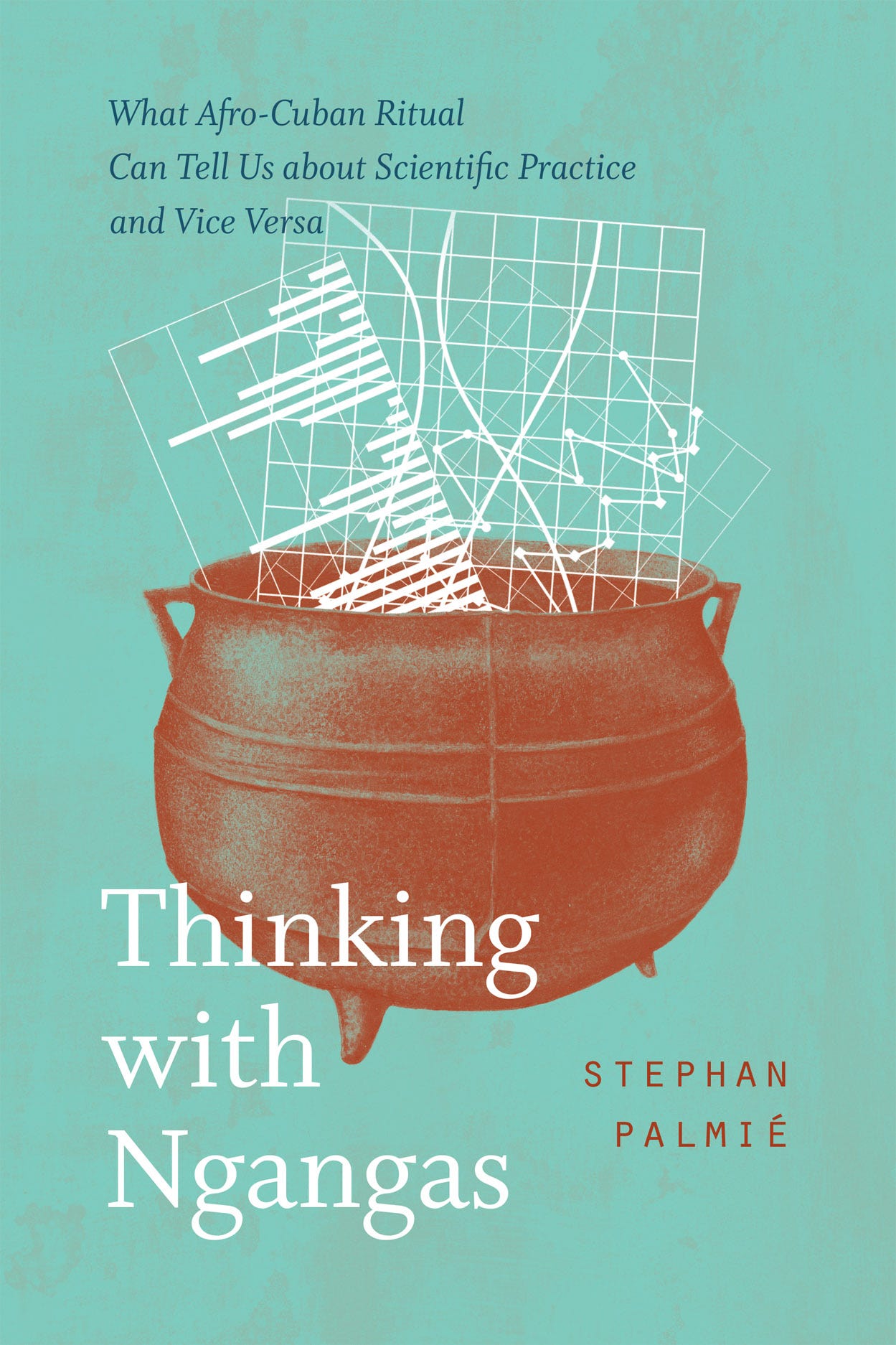
Thinking with Ngangas: What Afro-Cuban Ritual Can Tell Us about Scientific Practice and Vice Versa by Stephan Palmié
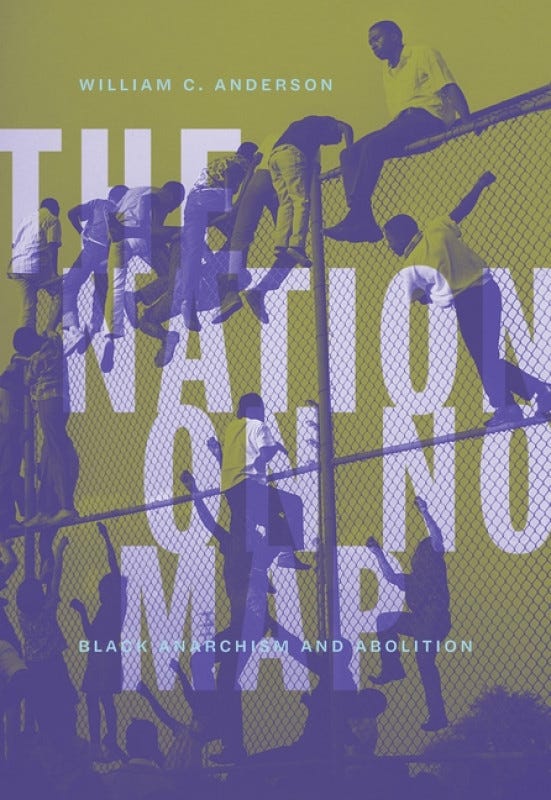
The Nation on No Map: Black Anarchism and Abolition by William C. Anderson